

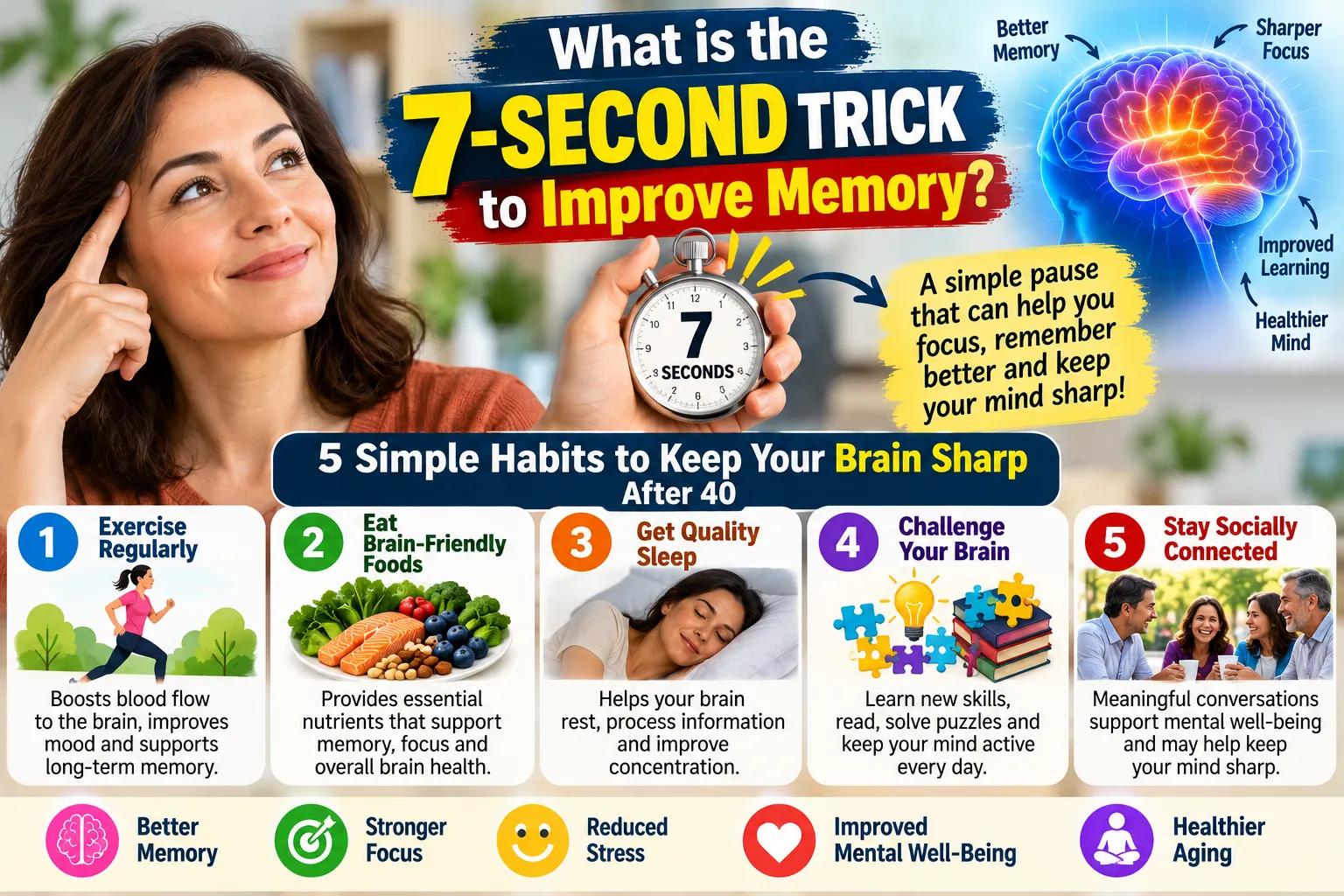
What is the 7 second trick to improve memory?
Have you ever walked into a room and forgotten why you went there, struggled to remember someone's name, or lost your train of thought during a conversation? Occasional forgetfulness is common, especially when you are tired, distracted, or dealing with stress. Fortunately, a few simple habits can help you pay attention to information and remember it more effectively.
You may have heard about the 7-second trick to improve memory on social media. The idea is simple: pause briefly, focus your attention, and consciously repeat or visualize the information you want to remember.
But does this trick really work? There is no strong scientific evidence that a specific seven-second technique instantly improves memory. However, short attention exercises can encourage you to slow down, process information, and reduce distractions.
In this article, discover how the seven-second memory exercise works, practical strategies for How to keep your mind sharp and focused, and when professional support may be helpful.

What Is the 7-Second Trick to Improve Memory?
The seven-second trick is a simple memory exercise in which you spend a few seconds deliberately focusing on something you want to remember.
For example, if someone tells you their name, you can pause briefly, repeat the name silently, and connect it with a detail about the person. This gives your brain an opportunity to process the information instead of immediately moving on to something else.
The technique is best understood as a short attention and recall exercise—not a medical treatment or a guaranteed memory-enhancement method.
How to Try the 7-Second Memory Trick
Follow these simple steps:
Step 1: Pause for a moment. Stop what you are doing and give the information your attention.
Step 2: Focus on one detail. Identify the name, number, instruction, or fact you want to remember.
Step 3: Repeat it mentally. Say the information silently or aloud if appropriate.
Step 4: Create an association. Connect the information with a familiar image, person, place, or idea.
Step 5: Recall it later. After a short interval, try remembering the information without looking at it again.
For example, if you need to remember that an appointment is at 3 p.m., repeat “appointment at 3 p.m.” and connect it with your afternoon schedule.
The key is paying attention when the information first arrives. A brief pause may help you avoid distractions, but it does not guarantee that you will remember everything.
Why Do We Sometimes Forget Things?
Memory involves several processes: taking in information, storing it, and retrieving it when needed. Difficulties can occur at any stage.
Common reasons for everyday forgetfulness include:
Lack of sleep: Poor sleep can affect attention, learning, and recall.
Stress and anxiety: Worrying thoughts can make it harder to concentrate.
Distractions: Multitasking may prevent information from being processed properly.
Information overload: Trying to remember too many things at once can be challenging.
Certain medications or health conditions: Some can affect memory and concentration.
Occasional forgetfulness does not automatically indicate a serious problem. However, persistent or worsening memory changes deserve medical attention.
7 Practical Ways to Improve Memory Naturally
The seven-second exercise may help you pay attention, but stronger memory habits involve more than one quick technique.
1. Get Enough Quality Sleep
Sleep supports learning, memory consolidation, attention, and emotional regulation. When you regularly sleep too little, you may find it harder to remember details or concentrate on tasks.
Most adults should aim for at least seven hours of sleep each night, although individual needs vary.
Try these sleep habits:
Maintain a consistent bedtime and wake-up time.
Keep your bedroom comfortable, quiet, and dark.
Reduce caffeine late in the day if it affects your sleep.
Create a relaxing bedtime routine.
Avoid sacrificing sleep to study or work longer.
If you regularly experience insomnia, loud snoring, or excessive daytime sleepiness, speak with a healthcare professional.
2. Practice Active Recall
One useful learning strategy is active recall, which means trying to retrieve information from memory rather than simply reading it repeatedly.
For example, after reading an article, close it and summarize the main points in your own words. When learning a new skill, test yourself instead of only reviewing instructions.
This method helps you identify what you remember and what needs more practice.
Daily tip: Spend five minutes recalling three things you learned during the day.
3. Use Spaced Repetition
Spaced repetition means reviewing information at increasing intervals rather than trying to learn everything in one sitting.
For example, review new information after learning it, revisit it the next day, and test yourself again several days later.
This approach is useful for learning vocabulary, studying for exams, remembering professional information, or developing new skills.
You can use flashcards, a notebook, or a simple calendar reminder to schedule your reviews.
4. Exercise Regularly
Physical activity supports cardiovascular health, sleep, mood, and overall well-being. Regular movement is also associated with better cognitive health.
You do not need an intense workout to get started. Walking, cycling, dancing, swimming, or other activities that suit your fitness level can be useful.
Aim to build a consistent exercise routine and increase activity gradually. If you have a medical condition or are unsure which exercises are appropriate, ask a healthcare professional for advice.
5. Eat a Balanced Diet
Your brain needs nutrients to function normally. A balanced diet containing vegetables, fruits, whole grains, protein sources, nuts, seeds, and healthy fats supports overall health.
Consider including foods such as:
Leafy green vegetables
Berries and other colorful fruits
Beans and lentils
Nuts and seeds
Whole grains
Fish, eggs, or other suitable protein sources
No single food can guarantee better memory. Be cautious with supplements marketed as instant brain boosters, particularly when they promise dramatic results without reliable evidence.
6. Manage Stress and Practice Mindfulness
When your mind is occupied with worries, it can be difficult to focus on new information. Stress-management techniques may help you feel calmer and better prepared to concentrate.
Try a brief breathing exercise, mindfulness practice, gentle stretching, or a quiet walk.
You can also use the seven-second trick as a reminder to pause before switching tasks. Take a moment to identify what matters most and give that task your attention.
If stress, anxiety, or low mood persists and interferes with daily life, consider speaking with a qualified mental health professional.
7. Challenge Your Brain and Stay Socially Connected
Learning new skills and engaging in meaningful conversations provide opportunities to practice attention, language, and problem-solving.
You might read a book, learn a language, play a strategy game, cook a new recipe, practice music, or join a community activity.
Talking with friends and family can also support emotional well-being and provide opportunities to share experiences and ideas.
These activities are valuable parts of a healthy lifestyle, although none can guarantee that you will avoid age-related memory problems.
How to Keep Your Mind Sharp and Focused Every Day

If your goal is How to keep your mind sharp and focused, start with a few realistic habits rather than attempting to change everything at once.
Here is a simple daily plan:
Morning: Get up after sufficient sleep and take a short walk if possible.
During work or study: Focus on one task at a time and take breaks when needed.
When learning something new: Use the seven-second pause, repeat important information, and test yourself later.
During meals: Choose balanced foods and drink fluids according to your needs.
Evening: Review what you learned and prepare for the following day.
Before bed: Follow a relaxing routine that supports quality sleep.
Use reminders, calendars, and written lists when appropriate. These are not signs of poor memory; they are practical tools that reduce mental overload.
When Should You Seek Professional Help?
If you experience persistent difficulty concentrating, ongoing anxiety, low mood, or stress that interferes with everyday activities, professional support may help.
A Mental Health Counselor can help people develop coping strategies for stress, anxiety, emotional challenges, and other mental health concerns. If you are searching for a Mental Health Counselor in Florida, check the professional's credentials, state licensure, areas of specialization, and whether their services fit your needs.
However, new or worsening memory problems may also have medical causes. A primary care clinician can review your symptoms, medications, sleep, and overall health and determine whether further evaluation is needed.
Seek urgent medical care if confusion or memory difficulties begin suddenly, especially with weakness, facial drooping, severe headache, or difficulty speaking.
Mental Health Awareness and Memory
Mental health awareness is important because emotional well-being and concentration are connected. Stress, anxiety, depression, and poor sleep can sometimes make it harder to focus or remember information.
Final Thoughts
The 7-second trick to improve memory is best viewed as a brief pause that encourages attention, repetition, and association. It is not a scientifically established shortcut that instantly upgrades your memory.
For lasting support, combine simple focus techniques with quality sleep, regular physical activity, balanced nutrition, active recall, spaced repetition, stress management, and continued learning.
If you want to learn How to keep your mind sharp and focused, consistency matters more than a single trick. Pay attention to your daily habits, use practical memory aids, and seek professional guidance if memory changes or emotional difficulties become persistent.
Frequently Asked Questions (FAQs)
1. What is the 7-second trick to improve memory?
It is a short attention exercise in which you pause, focus on information, repeat it mentally, and connect it with something familiar. There is no strong evidence that exactly seven seconds produces a special memory benefit.
2. Does the seven-second memory trick really work?
A brief pause and deliberate repetition may help you pay attention to information. However, the exact seven-second duration has not been established as a scientifically proven memory technique.
3. How can I improve my memory naturally?
Get adequate sleep, exercise regularly, eat a balanced diet, practice active recall, review information over time, and manage stress.
4. How to keep your mind sharp and focused at work?
Reduce distractions, work on one task at a time, take regular breaks, write down priorities, and use reminders for important information.
Medical Disclaimer: This article is for educational and informational purposes only. It is not a substitute for professional medical or mental health advice, diagnosis, or treatment. Consult a qualified healthcare professional about persistent or worsening memory problems.