

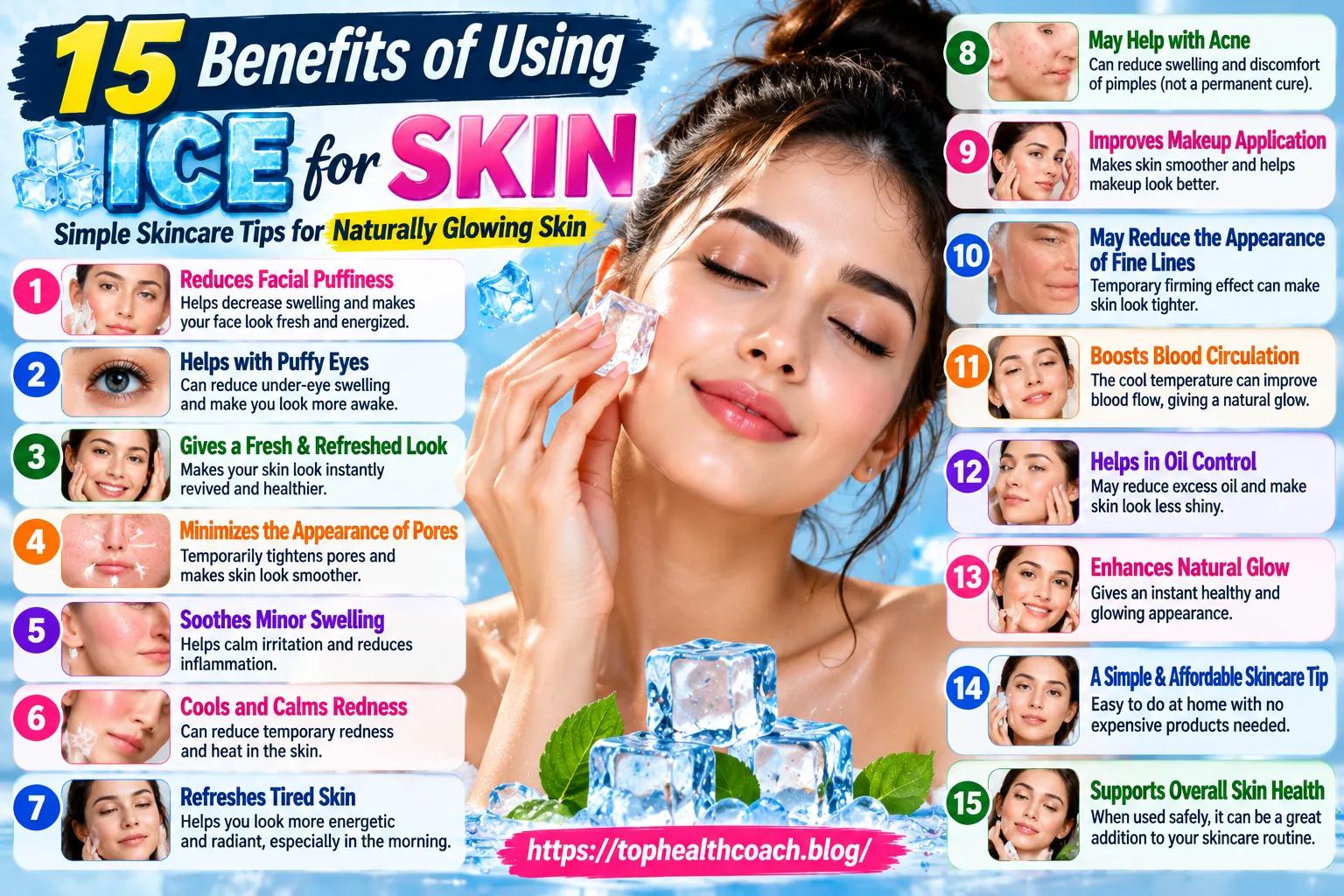
Benefits of Using Ice for Skin
Facial icing has become a popular skincare trend for people who want refreshed-looking skin without expensive treatments. From reducing the appearance of morning puffiness to creating a temporary cooling effect, applying cold to the face is often promoted as a simple beauty routine. But is ice actually good for your face, and can it help you achieve glowing skin?

The answer depends on how you use it and what you expect from it. Cold temperatures may temporarily reduce puffiness and make your skin feel refreshed, but facial icing is not a permanent solution for acne, wrinkles, dark spots, or uneven skin tone.
In this guide, we will explore the possible benefits of Ice for Skin, the Benefits of Cold Facials, the risks of facial icing, and the safest way to incorporate cooling into your skincare routine.
What Is Facial Icing?
Facial icing is a skincare technique that involves applying a cool compress or a cold object to the face for a short period. Some people use ice cubes wrapped in a soft cloth, while others prefer chilled facial rollers, cooling masks, or refrigerated skincare products.
The cold sensation temporarily affects the skin's surface blood vessels and may help reduce the appearance of mild swelling. This is why some people use facial icing in the morning, particularly around the eyes and cheeks.
However, facial icing is not a medically proven treatment for every skin concern. Its effects are generally temporary, and individual results can vary.
7 Possible Benefits of Ice for Skin
1. May Reduce Morning Facial Puffiness
One of the most common reasons people try Ice for Skin is to reduce morning puffiness. Mild swelling can occur after sleeping, eating a salty meal, or experiencing temporary fluid retention.
A cool compress may help make puffiness less noticeable for a short time. Gently applying a cool, damp washcloth around the cheeks and under-eye area can be a safer alternative to rubbing an ice cube directly on your skin.
Persistent or sudden facial swelling should not be treated with ice alone, particularly when it is painful or accompanied by other symptoms.
2. Creates a Refreshed Appearance
A cool compress can make your face feel refreshed, especially after waking up or spending time in warm weather. The cooling sensation may temporarily make your skin look less flushed or swollen.
However, facial icing does not permanently improve skin texture or create lasting radiance. For healthier-looking skin over time, consistent skincare, adequate sleep, hydration, and sun protection are more important.
3. May Temporarily Reduce the Appearance of Redness
Cold temperatures can temporarily affect blood flow near the skin's surface. For some people, this may make mild, temporary redness less noticeable.
However, ice is not a treatment for conditions such as rosacea, eczema, or persistent skin inflammation. Extreme cold can actually worsen redness and irritation in sensitive skin.
If you have a skin condition, consult a qualified healthcare professional before adding facial icing to your routine.
4. May Temporarily Tighten the Look of Skin
Some people notice that their skin looks slightly firmer immediately after applying something cool. This effect is temporary and should not be confused with actual skin tightening.
Ice for Skin does not stimulate enough lasting collagen production to replace evidence-based treatments for wrinkles or skin laxity. A broad-spectrum sunscreen and an appropriate skincare routine are better long-term steps for supporting healthy skin.
5. Can Help You Feel Refreshed After a Warm Day
A cool compress can feel soothing after being outdoors in warm weather. It may provide temporary comfort when your face feels warm, provided your skin is not sunburned or injured.
If you have a sunburn, avoid placing ice directly on the affected skin. Use a cool, damp cloth instead, and seek medical advice if you develop severe pain, extensive blistering, or other concerning symptoms.
6. May Temporarily Reduce the Appearance of Under-Eye Puffiness
The delicate skin around your eyes can look puffy after poor sleep, allergies, or temporary fluid retention. A cool compress may help reduce the appearance of mild puffiness for a short time.
Use a clean, cool cloth and avoid pressing hard on your eyes. Do not place ice directly on your eyelids or eyeballs.
Cooling is unlikely to eliminate dark circles caused by genetics, pigmentation, thin skin, or the natural structure of the under-eye area.
7. Provides a Simple, Low-Cost Cooling Step
You do not need an expensive skincare device to enjoy the cooling sensation of a cold facial. A clean washcloth cooled with water can be an inexpensive option.
Remember that simple skincare habits often offer more meaningful long-term benefits than trendy treatments. Gentle cleansing, moisturizer, sunscreen, and products suited to your skin type should remain the foundation of your routine.
Understanding the Benefits of Cold Facials
The Benefits of Cold Facials are mainly associated with temporary cooling, comfort, and the appearance of reduced puffiness. Some people enjoy using chilled facial rollers, cooling masks, or cold compresses as part of their morning routine.
Here are a few important points to remember:
Temporary depuffing: Cooling may make mild facial swelling less noticeable.
Refreshing sensation: Cold skincare tools can feel soothing and invigorating.
Short-term cosmetic effect: Skin may appear less puffy immediately after cooling.
Convenience: A cool washcloth is an inexpensive alternative to specialized tools.
Cold facials should not be confused with professional dermatological treatments. There is limited high-quality evidence that ordinary facial icing provides lasting improvements in acne, wrinkles, pigmentation, or collagen production.
How to Ice Your Face Safely
If you want to try facial icing, follow these safety steps.
Step 1: Clean Your Face
Wash your face gently with a cleanser appropriate for your skin type. Avoid applying ice to skin that is already irritated, cracked, or injured.
Step 2: Use a Cool Compress Instead of Direct Ice
Wet a clean, soft washcloth with cool water and gently wring it out. You can also use a chilled facial tool according to its manufacturer's instructions.
If you choose to use an ice cube, wrap it completely in a clean, thin cloth. Never press bare ice directly against your skin.
Step 3: Keep the Contact Brief
Move the cool compress gently over the face without pressing hard or keeping it in one place for too long. Stop immediately if you experience pain, burning, numbness, unusual whitening, or increased redness.
There is no universally established ideal duration for facial icing. Longer exposure does not mean better results.
Step 4: Apply Moisturizer
After cooling, gently pat your face dry and apply a moisturizer suited to your skin type. During the day, finish with a broad-spectrum sunscreen with SPF 30 or higher.
Step 5: Watch How Your Skin Responds
If you notice irritation, increased sensitivity, or persistent redness, stop facial icing. People with very sensitive skin, rosacea, cold urticaria, or conditions affecting circulation or sensation should avoid facial icing unless a healthcare professional advises otherwise.
What Are the Disadvantages of Facial Icing?
Although cooling may feel refreshing, facial icing also has potential risks.
1. Cold injury: Direct or prolonged contact with ice can damage skin and, in severe cases, cause a cold burn or frostbite-like injury.
2. Skin irritation: Sensitive skin may become red, uncomfortable, or more irritated after exposure to extreme cold.
3. Worsening of certain conditions: Cold may trigger symptoms in people with cold urticaria or aggravate some skin conditions.
4. Unrealistic expectations: Facial icing will not permanently remove acne, shrink pores, erase wrinkles, or eliminate dark spots.
5. Delayed treatment: Relying on icing for persistent acne, unexplained swelling, or ongoing inflammation may delay appropriate care.
The safest approach is to use gentle cooling rather than extreme cold and to stop if your skin reacts negatively.
Is Ice Good for Every Skin Type?
Not necessarily. Your skin type and any existing skin conditions should influence your skincare choices.
Oily skin: A cool compress may feel refreshing, but it does not regulate oil production over the long term.
Dry skin: Use gentle cooling and follow with a moisturizer to support the skin barrier.
Sensitive skin: Avoid direct ice and extreme temperatures; a cool cloth may be better tolerated.
Acne-prone skin: Cooling may temporarily soothe discomfort, but it does not treat the underlying causes of acne.
Rosacea-prone skin: Sudden temperature changes may trigger symptoms, so facial icing may not be suitable.
When in doubt, keep your routine simple and consult a dermatologist for persistent skin concerns.
Final Thoughts
So, is ice good for your face? It can be useful for temporary relief from mild puffiness and for a refreshing skincare experience when used carefully. The Benefits of Cold Facials are mostly short-term cosmetic effects rather than permanent changes to your skin.
For safer results, choose a cool washcloth over direct ice, avoid prolonged exposure, and moisturize afterward. If your goal is clearer, healthier-looking skin, focus on gentle cleansing, consistent moisturizing, daily sunscreen, and treatments that are appropriate for your specific skin concerns.
Facial icing can be an optional addition to your routine, but it is not essential for healthy skin.
Frequently Asked Questions (FAQs)
1. Is ice good for your face?
A cool compress may temporarily reduce mild puffiness and make your face feel refreshed. However, facial icing is not a proven long-term treatment for acne, wrinkles, or pigmentation.
2. Can I apply ice to my face every day?
Daily facial icing is not necessary. Frequent or prolonged exposure to extreme cold can irritate or injure your skin. If you enjoy cooling, use a clean, cool washcloth and stop if irritation occurs.
3. Does ice help reduce facial puffiness?
It may temporarily reduce the appearance of mild puffiness. The effect is not permanent, and persistent or unexplained swelling may need medical evaluation.
4. Can ice remove pimples?
No. Ice does not treat the underlying causes of acne. A cool compress may temporarily soothe discomfort, but persistent acne may require evidence-based skincare or advice from a dermatologist.
5. Does ice whiten the skin?
No. Ice does not permanently lighten your natural skin tone or remove pigmentation. Daily sunscreen and appropriate treatments recommended by a dermatologist are better options for managing uneven skin tone.
6. Can ice remove dark spots?
There is no good evidence that facial icing removes dark spots. Sun protection and suitable pigmentation treatments may help, depending on the cause of the spots.
7. Should I put ice directly on my face?
No. Direct ice contact can damage skin, especially when held in one place or applied for too long. Use a cool compress or wrap the ice completely in a clean cloth.
8. What is the best time to apply ice to your face?
Some people prefer a cool compress in the morning to reduce the appearance of puffiness. There is no strong evidence that morning or nighttime cooling produces better long-term skincare results.
9. What should I do after facial icing?
Gently pat your face dry, apply a moisturizer suitable for your skin, and use broad-spectrum SPF 30 or higher during the day. Stop if your skin feels painful, numb, or irritated.
10. Are cold facials safe for sensitive skin?
Not always. Extreme cold may worsen sensitivity or trigger certain skin conditions. A cool washcloth may be better tolerated, but people with rosacea, cold urticaria, or circulation problems should seek professional advice before trying facial icing.
Medical Disclaimer: This article is for educational and informational purposes only and is not a substitute for professional medical advice, diagnosis, or treatment. Consult a qualified healthcare professional or dermatologist about persistent skin problems or before changing your skincare routine.